
Choosing the right jumps is about much more than creating a pretty arena. The best horse jump designs help horses understand the question in front of them, give riders useful skills to practice, and make the training space feel intentional. Old Dominion Horse Jump Company, based in Washington, Virginia, offers a useful example through its custom-jump work, including hand-built wood equipment, branded sponsorship fences, decorative upgrades, and options for pony, university, corporate, and Grand Prix settings. With more than 20 years of custom design experience and nationwide shipping, the company shows how arena character and practical function can work together.
A strong jump collection should not rely on one dramatic centerpiece or a row of identical rails. Instead, it should give riders and horses a gradual range of visual questions, heights, widths, and exercises. The goal is to build confidence first, then introduce appropriate complexity as the partnership develops.
Why Jump Design Matters
A jump is a training tool, a visual question, and part of the course flow. Thoughtful designs let riders practice rhythm, straightness, balance, adjustability, and accurate turns. Repeating the same plain vertical can be useful for basics, but a complete program also needs a controlled variety. Decorative elements should support the exercise, never hide poor construction, or make the fence unclear.
Start With The Purpose Of The Arena
Begin by identifying who will use the equipment. A private arena may prioritize adjustable standards and compact storage. A lesson program needs sturdy pieces that can suit beginners, ponies, and experienced riders. A show venue may need bolder colors or sponsor-ready details, but each obstacle should remain fair and readable.
- Beginner lessons: Favor inviting rails, small crossrails, simple verticals, and visible ground lines.
- Daily schooling: Add oxers, gates, cavaletti, planks, and low fillers for flexible exercises.
- Clinics: Choose equipment that is easy to move, adjust, and reset.
- Pony programs: Use scaled, approachable designs that build interest without excess pressure.
Account For Horse Vision And Contrast
Horses do not see an obstacle exactly as riders do. Light, shadows, movement, background color, and the transition from sun to shade can all change how a fence appears. Research on equine vision and performance also highlights the importance of light, color, and depth perception when asking a horse to jump.
Use contrast as a starting point rather than a rigid color rule. Ask whether the top rail stands out from the arena background, whether a filler is clear without appearing confusing, and whether the fence looks different from the reverse direction. For example, a horse may jump bright rails confidently but hesitate at a dark, solid wall. Introduce that wall at a low height, with an inviting ground line and plenty of time to inspect it calmly.
Build A Balanced Mix Of Jump Types
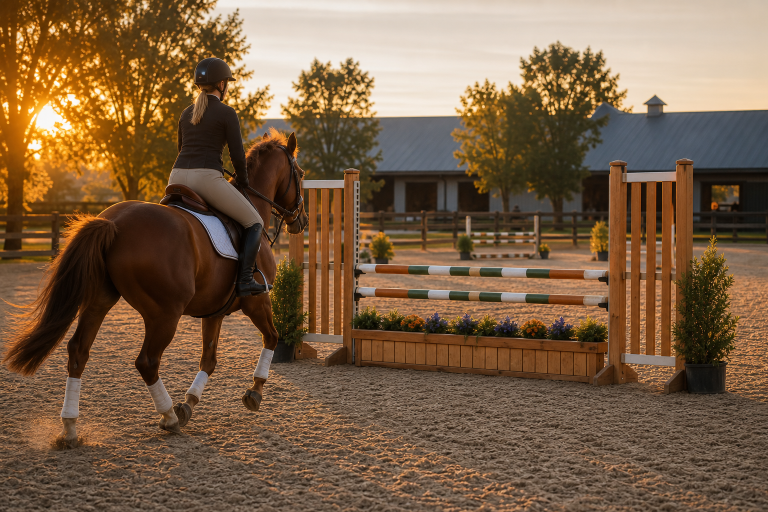
A useful collection includes obstacles that teach different skills. Verticals help with straightness, takeoff awareness, and elevation. Oxers ask for adjustability as the width increases. Gates, walls, planks, and flower boxes create solid-looking visual questions. Roll tops and coops bring a natural profile, while cavaletti improve rhythm, coordination, and low-impact strength work.
Start with versatile standards, poles, and a few fillers. Then add visual variety in stages. A small arena does not need every jump type. Several well-chosen pieces that can be reset into different exercises are more valuable than a crowded collection of single-purpose fences.
Use A Practical Safety Check
Safe equipment does not eliminate risk, but it reduces avoidable problems when paired with good footing, correct setup, supervision, and sensible progression. Wider safety discussions in eventing also reinforce that fence design and risk management belong together. The FEI’s discussion of frangible technology and course design is a useful reminder that safer jumping environments require continued attention to construction and layout.
- Confirm standards are stable and rails sit correctly in appropriate cups.
- Remove unused cups, loose poles, and clutter from takeoff and landing areas.
- Inspect wood, paint, bolts, hinges, and hardware regularly.
- Keep footing level and maintain clear approaches and landings.
- Increase height, width, and visual pressure in small, appropriate steps.
Plan For Budget, Storage, And Maintenance
Value is not limited to the purchase price. Consider material quality, paint durability, assembly requirements, storage space, shipping, and whether rails or fillers can be replaced individually. Repaintable surfaces and modular components can extend the useful life of a set when barn colors, sponsors, or rider needs change.
Create a simple inventory for each piece, recording dimensions, condition, storage location, repairs, and the last inspection date. This habit helps busy barns spot maintenance issues before they interrupt a lesson or show day.
A Simple Jump Selection Checklist
- Define the main use: lessons, homeschooling, shows, or sponsorship.
- Measure the arena, storage area, gate widths, approaches, and landing space.
- List the skills riders need to practice, such as rhythm, width, fillers, or turns.
- Buy a core set of standards, rails, verticals, and adjustable elements first.
- Add gates, planks, walls, flowers, or natural-style fillers as training needs grow.
- Check stability, rail placement, material quality, and maintenance needs before use.
Final Thoughts
The best jump designs combine purpose, clarity, safety, and personality. A good fence helps the horse understand the task, gives the rider a specific skill to develop, and contributes to an arena that feels organized and welcoming. Visual appeal matters most when it supports sound riding and progressive training.

